Structured Light Intensity
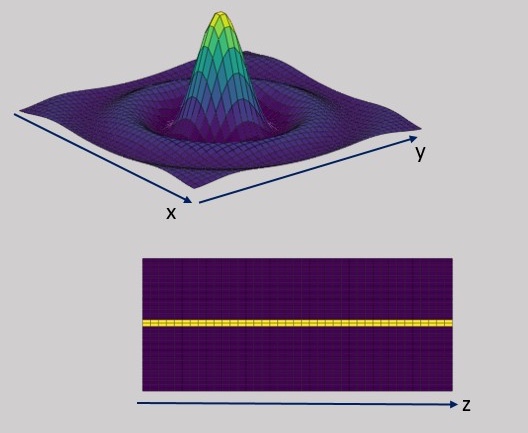
As light propagates and interacts with matters, the information it carries are encoded in its three main properties (namely degrees of freedom): Intensity, Phase, and Polarization. Shaping light by structuring and manipulating these properties makes it possible to control the light-matter interaction. Consequently, structured light has made a wide range of possibilities in various applications.
Structured Light Phase
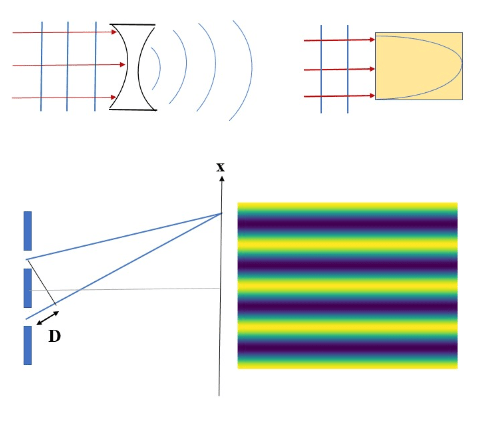
To fully describe the wavefunction, even when we treat the propagation of light through the scalar wave equation, having the intensity profile is not enough. A scalar wavefunction is defined by two parameters of intensity and phase. While the intensity characterizes the amplitude of the wavefunction, phase is an additional degree of freedom which controls the propagation of the light beam. Strategically phase modulation can change the wavefunction and lead to new applications of light.
Structured Light Polarization
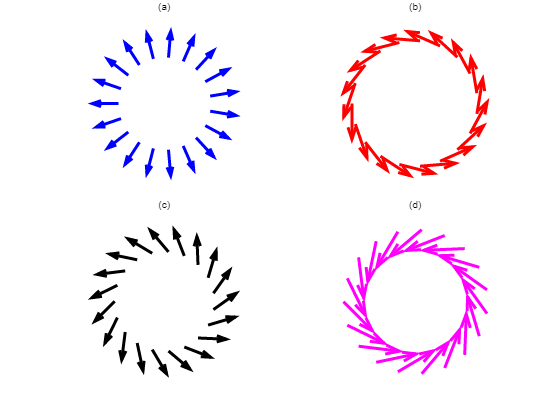
The Polarization is one of the three degrees of freedom by which the complex vector field of the light is defined. Various types of vector fields with new properties can emerge through engineering the state of polarization. These space-varying polarizations are inhomogeneous on the field cross-section and play an important role in some experiments of light-matter interactions for exploring the orientations of the target sample.
Latest posts
 Forms & Functions