

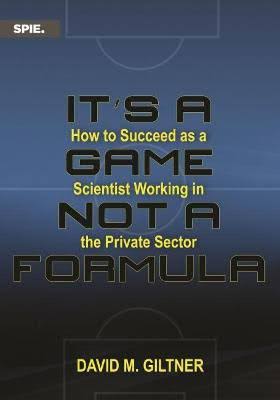
It’s a must-to-read book for scientists who want to make a leap from academia to industry. In this outstanding book the writer explicitly describes the differences between two worlds of academia and private sector with an attempt to make a bridge between these two territories rather than separating them. The writer first explains the game identity of the private sector compared with the formula-approach of academia. The differences between these two approaches mentioned in chapter two define the rules of the game as the things that matter the most in private sector. The PhD stereotypes are warned in chapter three to make these group aware of the habits that they have acquired in academia but could be damaging their career in industry. The playbooks with step-by-step useful guidelines along with many examples and interviews with scientists having the experience of going through this transition in their career path make this book very practical. This book is useful for scientists who either think or want to move to industry and private sector or consider taking a high risk of starting their company which is described by the author as an ultimate game. Even those scientists who don’t think about this transition will benefit from this book as it brings a new light on their strengths and habits.
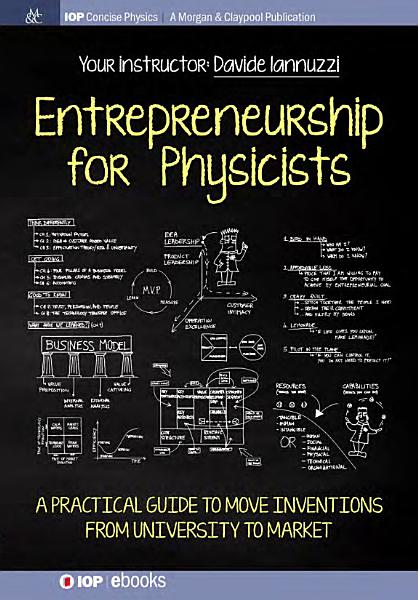
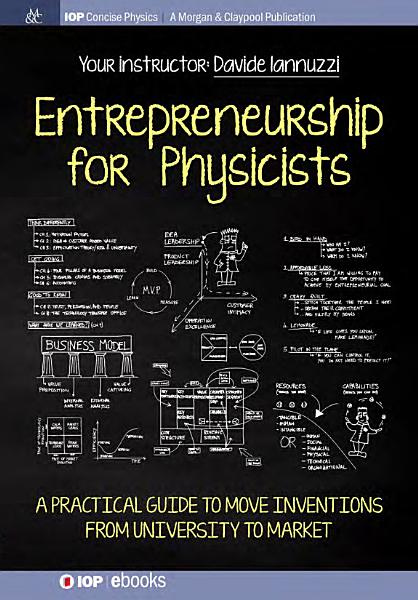
By the word of the writer himself, “it is first and foremost a book from a physicist to a physicist, despite the fact that the subject discussed has little to do with physics”. With an engaging language, the book provides a great help for overcoming the doubts and insecurities that a physicist may have when facing a subject like business. With a summary of his own personal experience in technology transfer, the writer first describes why it is worth to start a business. Then in the following chapters, the book explains the basic set of knowledge for a successful technology transfer process. In explaining the process, from evaluating the idea to creating the business plan, the author illustrates different business models with making useful connections between the world of business and that of a scientist; Being an experienced scientist, he constantly mentions the potentialities that scientists have, such as possessing a great deal of creativity, as positive factors in the technology transfer process. However, and in accordance with the egos that especially physicists have about an excellent idea, he also gives some tips for moving forward from idea excellency to the market excellency. For examining and targeting the market, the author details the working principles based on effectuation theory, which suggests deploying creative and transformative tactics until the goals gradually emerge instead of focusing on a specific goal and a given set of means for reaching it. The book includes at the end a hands-on reference for financial tools that every compony refers to.

It’s hard to categorize this masterpiece in any specific sort; Written in a unique and noble way, this book is a kind of philosophy of science; however softer than any scientific facts, it is more unvarying than philosophical ideas. And this is exactly what the author identifies as the characteristic of good explanations: “they are hard to vary”. In this book, Deutsch tries to picture a connecting line between the mind of a thinker to the reality of universe. Along this line, the writer takes the reader through some dots, all originated from one source, the beginning of of infinity, which started by seeking good explanations as the start of an unbounded progress, both theoretically and practically. The elements of these good explanations in describing the reality, and the infinity to which they lead us, are what the writer is trying to depict. He is doing it, for instance, by comparing the progress of human knowledge with the evolution of biological adaptation. And there is much more; while in one chapter the reader will be involved in following explanations about many-universe interpretation of quantum theory, there is also a chapter about the objectiveness of beauty and art. In all chapters, however, though apparently with different topics, there is something similar that strongly binds them together; that is a progressive effort for finding good explanations which lead the reader from the beginning to the infinity.
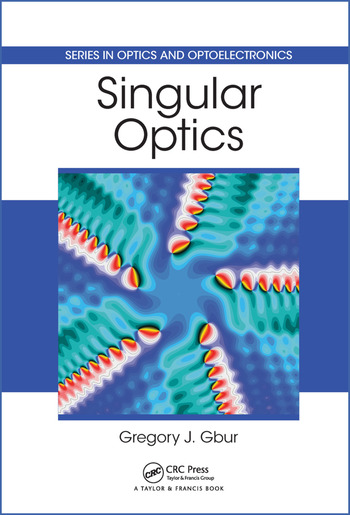
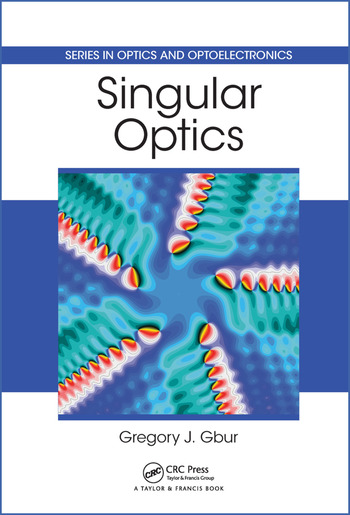
The author has written a comprehensive reference on singular optics. This field, that has a strong impact in several technologies from microscopy and biomedical optics to free-space optical communication as well as signal processing, has been grown during last decades (mostly well-known as optical vortices). Generally, it can be categorized as modern optics. Beyond providing basic fundamentals and introducing various forms of optical singularities, the book brings the reader to the techniques of generating and detecting optical vortices as well as their most significant applications. While the content focuses on singularities within classical optics, one chapter is devoted to the study of vortices in the quantum theory. The mathematical background corresponding to each topic has been provided throughout the chapters. However, a working knowledge of electromagnetic and optical wave is somewhat essential. The book’s target audiences, therefore, are advanced undergraduate and beginning graduate students in physics, optics, but also engineering. Moreover, the vast amount of knowledge on physics and technology of the field, and a rich list of related references make the book a valuable research reference.

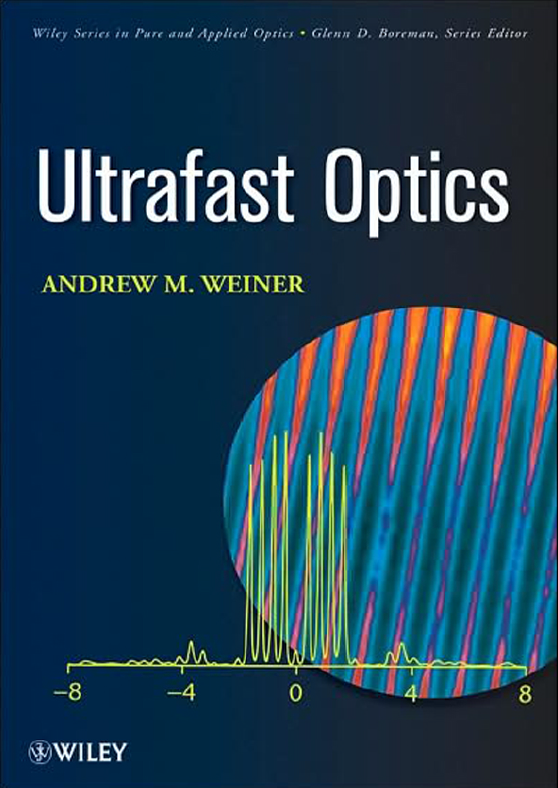
The author has written a valuable reference on lasers with ultrashort pulses, primarily at wavelengths in the visible range and longer, with an emphasize on signal aspects. The book starts with basic fundamentals of electromagnetic with regard to single-mode lasers and their essential elements. From this review, the author brings the reader to mode-locked lasers describing different modulators as the extra element of mode-locked lasers comparing with the single-mode lasers. In addition to generating the ultrashort pulses, this agile volume also gives instructions for how to measure ultrashort pulses. The remaining chapters mainly deal with nonlinear ultrashort optics and pulse shape manipulating methods. Additionally, two major applications of ultrashort pulses, namely time-resolved spectroscopy and ultrafast electromagnetic generation and measurement are covered. The fundamental principles with lots of details complemented by mathematical aspects make the book suitable for students of physics, optics, and engineering who aim to build a foundational knowledge about ultrafast optics. The book is also profitable for researchers who closely work with either generation or measurement techniques of ultrashort pulses.
By writing this master work, the writer aimed to get to this conclusion: “There are some ingredients in a conscious thinking that can’t be simulated by mere computations.” With a special entertaining philosophical language that is rarely seen in science writing, the author takes the reader smoothly through lots of details which could be boring if they have been told by a mere scientific voice. The content of the book is divided, generally, in two parts; The first part aims to answer this question: why we need a new physics to understand the mind. Some matters, mostly mathematical, are brought up in three chapters to show the shortage of the mere computation for understanding all aspects of the mind. Starting with the place of mind in physics, in the second part, he tries to answer this question: what new physics we need to understand the mind. Via a simple explanation of quantum theory, the last chapters lead the reader to the quantum mechanical aspect of the mind. The comprehensible illustration of lots of basic principles in mathematics and physics makes the book a valuable reference, especially for those who are interested in the mystical aspect of these fields of science regarding their connection with the mysterious world of the mind.

 Forms & Functions