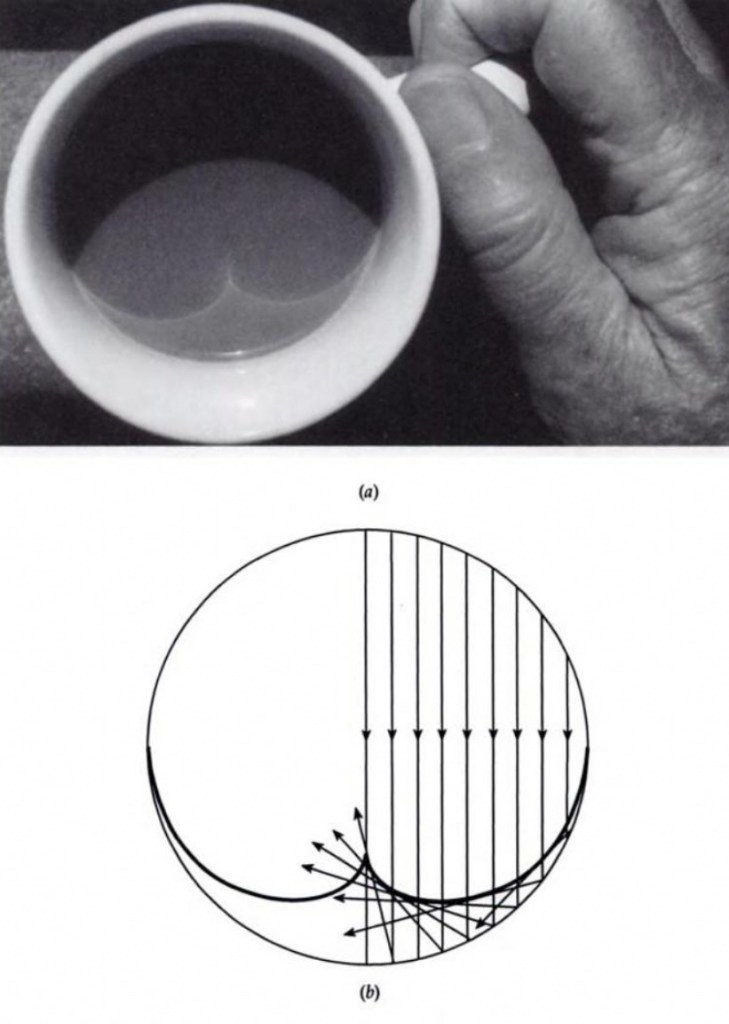
It might have happened for you that you saw a bright line in your coffee cup in a sunny day, as depicted in figure.1(a). It is a kind of focusing; If one ideally considers the sun as a point source, its parallel rays envelop a curved surface after reflection from the inner curved surface of the cup (figure.1(b)). This focus, however, is different from the perfect point focus we can produce using a cylindrical mirror; It is a typical natural behavior of light the observation of which doesn’t need a special experimental preparation, as it is the case for producing those focal points by a mirror. This generic structure also illustrates a structural stability: while any distortion of the mirror will immediately destroy the focus, the generic structure in the coffee cup will not disappear by deforming the shape of the cup, but would merely move.
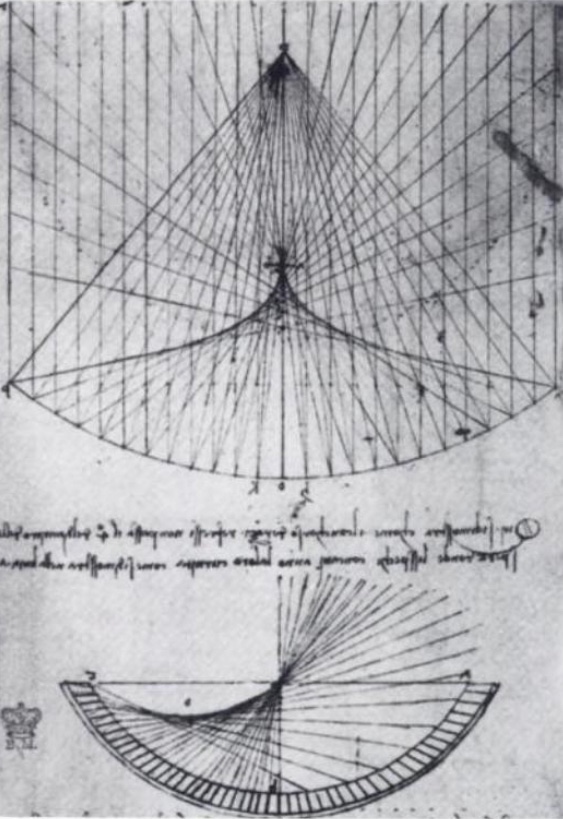
Figure 2 shows the first drawing of this generic structure using the laws of geometrical optics by Leonardo da Vinci. Why was he interested in studying natural patterns? We don’t know the answer. Nevertheless, since vortices (common structural patterns in nature) have become an active field of research in optics, we have known that some generic mathematical structures, like a vortex, have some interesting properties that make them potentially useful for some applications.
Vortex is one kind of generic mathematical structure that appear naturally under typical circumstances as circulating disturbance of some sort of matter, most commonly fluids. For example, a vortex can be produced in atmosphere when fluid flows around a blunt rigid obstacle. Such vortices have been formed by the airflow around the mountains. Even after releasing from obstacle, the vortices persist in their structure. This is an important characteristic that not only natural vortices but also optical vortices possess: they are robust structures in optical waves, making them useful for applications such as free-space optical communication. But what are optical vortices?
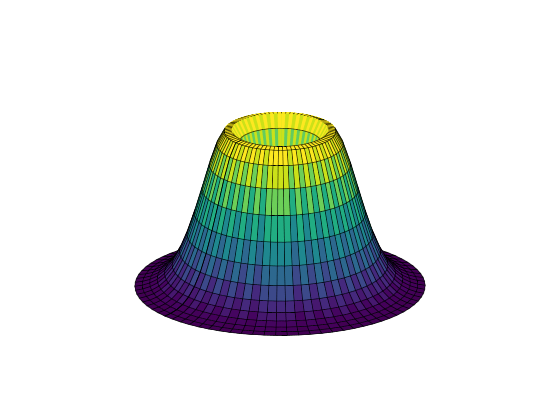
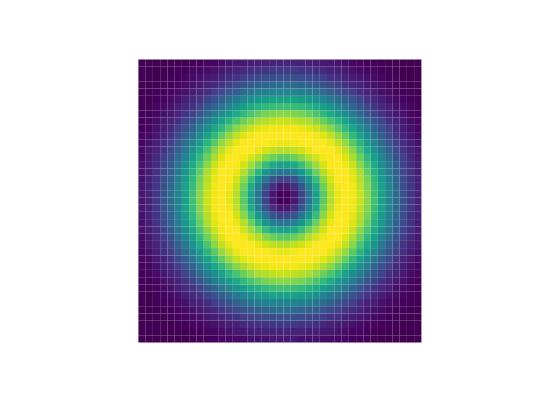
When we say optics, the first thing that comes into our mind is light. So, the study of optics means, at least traditionally, investigating the regions where there is a nonzero intensity of light. Optical vortices, however, belong to a field of optics named as singular optics, that is the study of regions where there is no light. It sounds crazy but that is how optical vortices are formed: circulating waves around regions of zero intensity. Figure.3 shows one form of singularity for light beam. For this form, as it can be better observed in 2D (figure.4), the intensity of light is zero at the central region.
While intensity (that is to say more accurately, the amplitude) of the beam light is the most common characteristic of light that we see or measure through optical experiments, it is not all that a beam of light possess. Phase is also an important property of light, defining how and where the light propagates. The zero intensity means that the phase of the light is undefined and can have different values. As a result, the phase has a circulating or helical behavior around zeros regions of light intensity, as depicted in figure.5. Roughly speaking, we can say that a point of zero intensity is a directionless point because the phase is undefined in this point where all lines of constant phase converge. These phase singularities have a well- defined mathematical structure which has a strong effect on how the light field behaves in general or specifically interacts with matters.
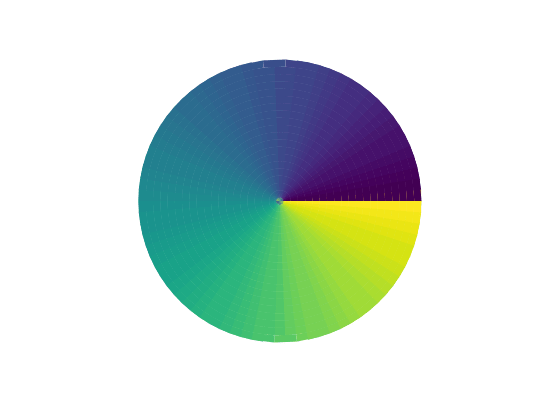
Interestingly, natural vortices were also appeared in one of Leonardo da Vinci’s painting: “Studies of water passing obstacles and falling” (figure.6). In this work, dated around 1508, he depicted the movement of actual water molecules in circular paths around the vortex. This form of swirling waves are natural patterns produced by falling water into a pond.
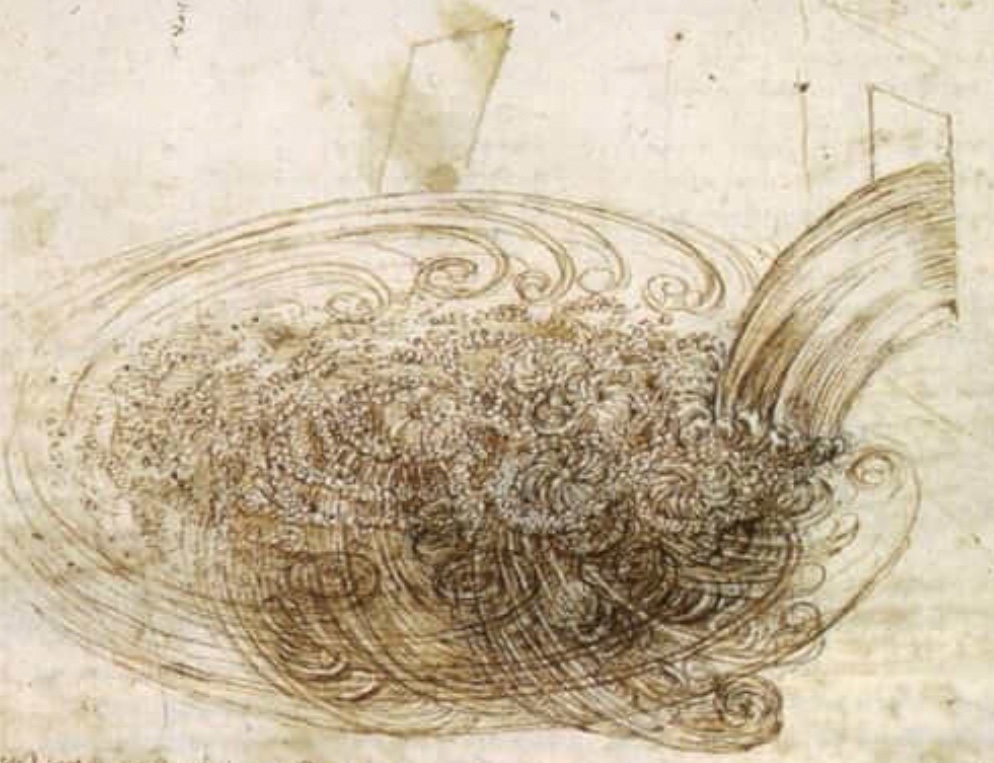
But is it not a real picture of nature that he was trying to depict!? A combination of art and science!
Book references:
1. J.F. Nye. Natural Focusing and the Fine Structure Light, CRC Press, 1999.
 Forms & Functions